


Publisher
Grow your own food and save money
A gardener in KwaZulu-Natal has proven to be a smart businessman, selling his home-grown produce to put money in is his pocket. This is thanks to the One Home, One Garden and Fruit Tree programme aimed for KwaZulu-Natal residents.
Muziwakhe Nsele (42) is a popular man in Hlathini, a village near Melmoth where he lives and sells vegetables such as beans, cabbage and potatoes.
Young farmer receives COVID-19 support
An emerging Eastern Cape farmer is one of the beneficiaries of government’s Coronavirus Relief Fund. 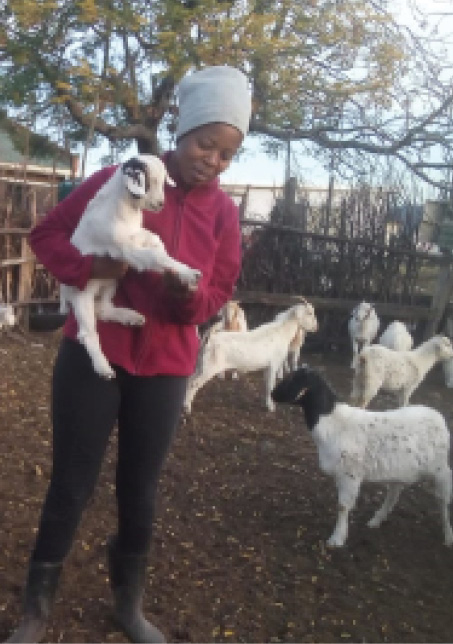
Nomagcinandile Suduka (27) is growing her family’s legacy and wealth by investing in agriculture.
COVID-19 is dangerous and we must take care
With 196 750 coronavirus cases and 3 199 deaths recorded by 5 July, government is again urging citizens to protect themselves and adhere to lockdown regulations.
South Africa is seeing a fast rise in its number of coronavirus (COVID-19) cases and government expects infections to surge in July and August.
The word surge entails a sudden and big increase in the number of positive cases, as recently seen in Gauteng, where the number of infections has grown to over 63 400 in a short period of time.
Become a Mzansi Tourism Champion!
A new online initiative is giving members of the tourism industry the chance to come together to support one another during the coronavirus (COVID-19) pandemic.
Mzansi Tourism Champions was set up with the main purpose of meeting the needs of tourism employees who have been left without an income during this time.
Support for artists saving livelihoods
The Department of Sport, Arts and Culture has provided much-needed support to over 2 000 practitioners in the creative industry.
The department has a R150-million relief fund to assist artists, athletes, technical personnel and the core ecosystem of the sector, whose gigs were cancelled due to the COVID-19 induced shutdown.
“We remain resolute in improving the quality of life for South Africans, in spite of the huge socio-economic impediments brought on by the restrictions of COVID-19.
Creative entrepreneur wins R50 000
The overall winner of the 2020 Innibos National Craft Awards, Johannesburg’s Oageng Manana, is going to plough his R50 000 in prize money into his emerging interior design and furniture crafting business.
Honouring Madiba amid the COVID-19 pandemic
In this, the 30th anniversary year of Nelson Mandela’s release from prison, South Africans must work harder than ever before to fulfil the dreams envisioned by the father of our nation.
As our economy struggles under the weight of the COVID-19 pandemic, there is a great responsibility to live up to the expectations of the public this Mandela Month.
Don’t share fake news!
Nelisiwe Dlamini (30), a researcher at the Council for Scientific and Industrial Research (CSIR), says it’s important to verify stories from social media, especially those about the coronavirus (COVID-19), before sharing them.
Building a better life
From humble beginnings in KwaNongoma, KwaZulu-Natal, 23-year-old Silondiwe Magwaza has conquered many obstacles to reach her dream of becoming a construction manager.
Growing up surrounded by poor infrastructure motivated Magwaza to explore new ways to uplift her community. She is now the first member of her family to obtain a degree.
Magwaza qualified at the University of the Witwatersrand in 2019, obtaining an undergraduate degree in construction studies.