


When 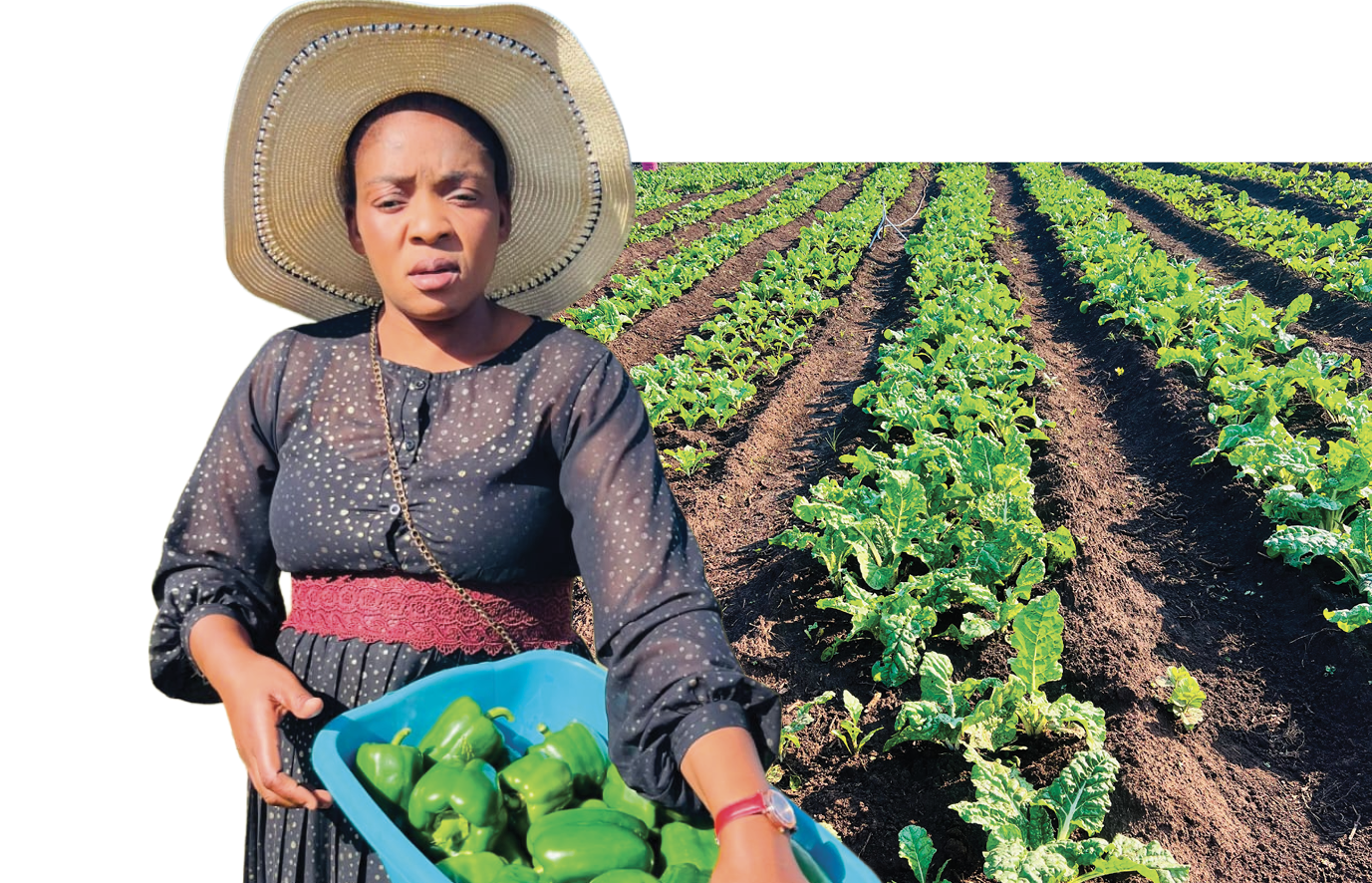 Nontobeko Mabaso began growing vegetables on her husband’s family land in Mtubatuba, KwaZulu-Natal, she was turning a childhood passion for farming into a livelihood.
“I grew up in a farming family, and it has always been my first love,” Mabaso said.
Her love for farming began with her uncle, who cultivated four hectares of communal land. Families in the surrounding community were allowed to use portions of the land to grow vegetables for their households, creating a culture of self-sufficiency and shared responsibility.
In 2024, Mabaso started growing vegetables for sale in her community. Green peppers were among her early crops and performed well, encouraging her to expand beyond subsistence farming.
The journey was not without setbacks. In 2025, an entire cabbage crop was destroyed by insects after she planted it in summer instead of winter.
“I lost the whole crop and ended up giving away what was left to the surrounding community,” she said.
The experience taught her valuable lessons about crop cycles and seasonal planning. She then shifted her focus to spinach, which proved highly successful.
Mabaso initially supplied 200 bunches of spinach a week to Boxer in Hluhluwe. Demand has since grown to 250 bunches weekly. She also supplies Boxer in Mtubatuba, Roots, Spar and Jock Morrison, bringing her total weekly supply to 750 bunches across five retail outlets.
Through her business, Mabaso Agri Solutions, she has established herself as a reliable supplier, with further opportunities opening up in Empangeni.
Although the farm does not yet employ permanent workers, Mabaso works alongside her children and young people from the community. She also mentors eight agriculture students from the University of KwaZulu-Natal and Coastal College, giving them practical experience.
“I spend time getting to know each one of them and understanding what they enjoy most, then help them develop those skills,” she said.
Mabaso’s growth has been supported by several organisations. The Wholesale and Retail Sector Education and Training Authority (W&RSETA) provided a voucher for seedlings and irrigation equipment, while the Salaam Foundation funded a perimeter fence. The KwaZulu-Natal Department of Agriculture and Rural Development provided tractors for land preparation and continues to assist with transport when required.
As South Africa marks Women’s Month, her message to women is: “Wake up and find ways to become self-reliant. You are capable of achieving far more than you realise.”
Mabaso encourages women to pursue opportunities that can help them build sustainable livelihoods and contribute to their communities.
 Email
Email Facebook
 Twitter
 WhatsApp