
In the villages and busy 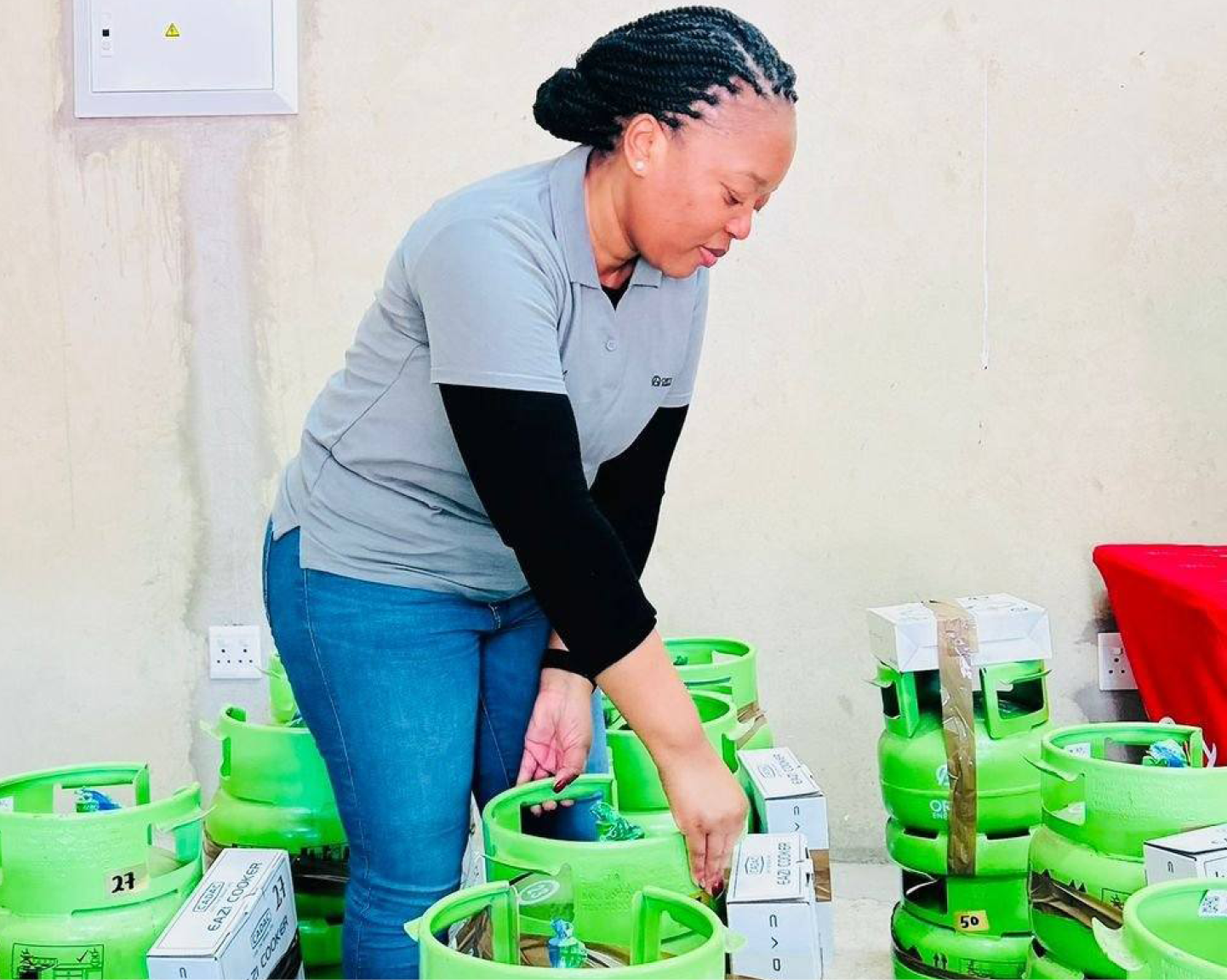 taxi ranks of Rustenburg, North West, blue LPG cylinders are becoming unlikely symbols of dignity and safety.
At the centre of this quiet energy shift is Refilwe Sebothoma, founder and Chief Executive Officer of Hakem Energies, a self-funded enterprise determined to tackle energy poverty while building opportunity from the ground up.
“I am very passionate about entrepreneurship because I believe it is a powerful tool that can help me empower people. Throughout the years, we have done a lot of things in different industries.”
Ending energy poverty
Her move into the energy sector was driven by concern about what she calls “energy poverty”.
“In marginalised communities such as townships and villages, you still find people without electricity,” she explains.
“And for those who do have electricity, it is expensive and they experience things such as load shedding. Some villages can go for weeks without electricity.
They then have to collect wood, while others resort to using paraffin and coal. There are a lot of dangers associated with energy poverty – and it mostly affects women.”
One incident cemented her resolve.
“In one of the villages where we sell gas, a woman was recently brutally raped and killed while she was collecting wood in the field. From a business perspective, it still shouldn’t be happening that people have to risk their lives. That is how this business was started. LPG for us was a solution that is already available, but we needed to package it in a way that low-earning communities can afford.”
Registered in 2022 and operational from 2024, Hakem Energies has built its model around flexibility.
“One of the biggest things for us is that customers can refill as they can afford. If you go to a fuel station to fill a 9kg cylinder, it will cost you about R400 and it is not something that our communities can afford. With our model, you can come with whatever amount you can afford. If you can only afford R40, that is what you will refill for.”
Affordability is matched by strict compliance.
“We just want to make sure that we comply correctly because this is a highly regulated industry. It is really important that we do things safely so that we can continue to save lives.”
Hakem’s reach extends beyond households.
“We serve not only households but also a broad range of commercial clients – from restaurants and resorts to funeral parlours, taxi ranks and mining operations. Whether in bulk or bottles, we deliver safe, certified LPG energy that keeps industries moving and communities thriving.”
Partnering with women and youth
The company also partners with local women and young people to distribute LPG.
“We see every flame lit not just as energy delivered, but as possibility ignited.”
Operating from North West, with a branch in Mpumalanga and plans to expand into Limpopo and Gauteng in 2026, the business employs 14 people.
Growth has required deep pockets in a tightly regulated sector
“We have five LPG boxes and one costs about R1 million – that’s a lot of money that many small businesses cannot afford. I was able to self-fund, but it has been very difficult and the margins are extremely tight. We are also consistently fighting against illegal operators who are not paying government taxes.”
Support from the Small Enterprise Development and Finance Agency’s (SEDFA) Asset Assist Programme provided a R230 000 grant.
“They sat with us to analyse where the business was and the kind of support that we needed. They bought us stock – cylinders and LPG – which really shifted things for us and gave us the ability to expand and attract new customers.”
Sebothoma believes national reforms could further unlock growth.
In his 2026 State of the Nation Address, President Cyril Ramaphosa committed more than R2.5 billion in funding for over 180 000 SMMEs, alongside R1 billion in guarantees. He also pledged to ease regulatory hurdles through the Business Licensing Bill and amend the National Credit Act regulations to make credit more accessible and affordable, particularly for women- and youth-led enterprises.
Sebothoma welcomed the commitment, describing it as “the kind of support SMMEs were looking to receive from government,” she concluded.
For more information, call +27 (68) 037 5410 or visit www.hakemenergies.co.za.
The NYDA can be reached at www.nyda.gov.za
For more information on SEDFA's Assest Assist Programme, visit www.dsbd.gov.za/asset-assist-progamme
 Email
Email Facebook
 Twitter
 WhatsApp