A damaged 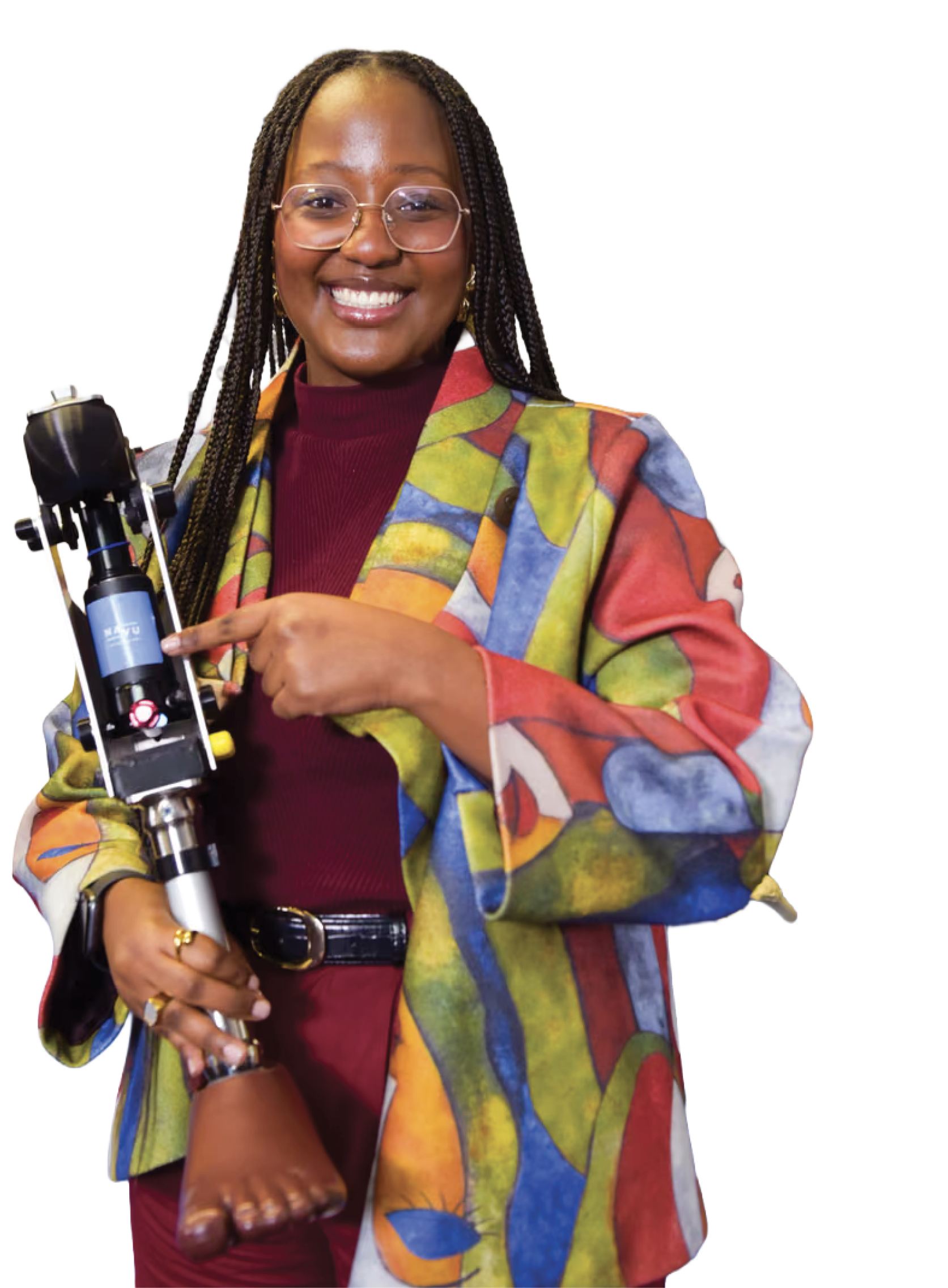 prosthetic knee can leave someone without a functioning leg while they travel to a clinic or wait for repairs. A Stellenbosch start-up NAVU Mobility is developing a technology that allows worn-out part of a prosthetic leg to be replaced instead of replacing the entire device.
“Prosthetics mean dignity, mobility and independence. Access to them needs to be universal and of high quality,” NAVU Mobility founder and Chief Executive Officer Amohetsoe Shale told Vuk’uzenzele.
In October, the company won first prize at the 2026 SAB Foundation Disability Empowerment Awards.
The company has developed the NK Gen-1, a prosthetic knee designed for people with above-knee amputations and is intended for use in public-sector clinics. The device is mechanical, with no battery or electronic parts. Its moving joint is designed to improve stability while standing and help users clear the ground while walking.
The knee is designed with replaceable parts, allowing clinics to repair worn components without replacing the entire device. According to Shale, this could reduce repair times and travel costs for users.
Shale, a biomedical engineer and prosthetist, developed the idea while she was completing her practicals at medical facilities in the Eastern Cape and Gauteng. There, she saw how devices not suited to local conditions could limit access for people to receive the support they needed.
“Prosthetic teams in public facilities do remarkable work with limited resources, and I wanted to build something that makes their job easier,” she said.
The company has not yet set a price for the NK Gen-1, but it is being designed with public-sector budgets in mind. NAVU Mobility also believes affordability should be measured over the prosthesis's lifespan, including repairs and downtime.
While the knee is still under development and has not yet been approved for general use, Shale said the latest version withstood more than 2 000 newtons of static force during testing.
NAVU plans to apply for registration with the South African Health Products Regulatory Authority in 2027, with pilot projects expected later that year, subject to funding, ethics approval and participants' eligibility. The knee will only be made available once registration has been approved.
NAVU is working with partners including Shonaquip Centre for Inclusive Innovation & Entrepreneurship, Stellenbosch University and Walter Sisulu University. The company is also preparing for local manufacturing in 2027. According to Shale, local production could improve access to spare parts and repairs while supporting local skills and jobs.
“A prosthetic knee is not only a medical device. It is a route back to work, family and community life,” Shale concluded.