


As South Africa 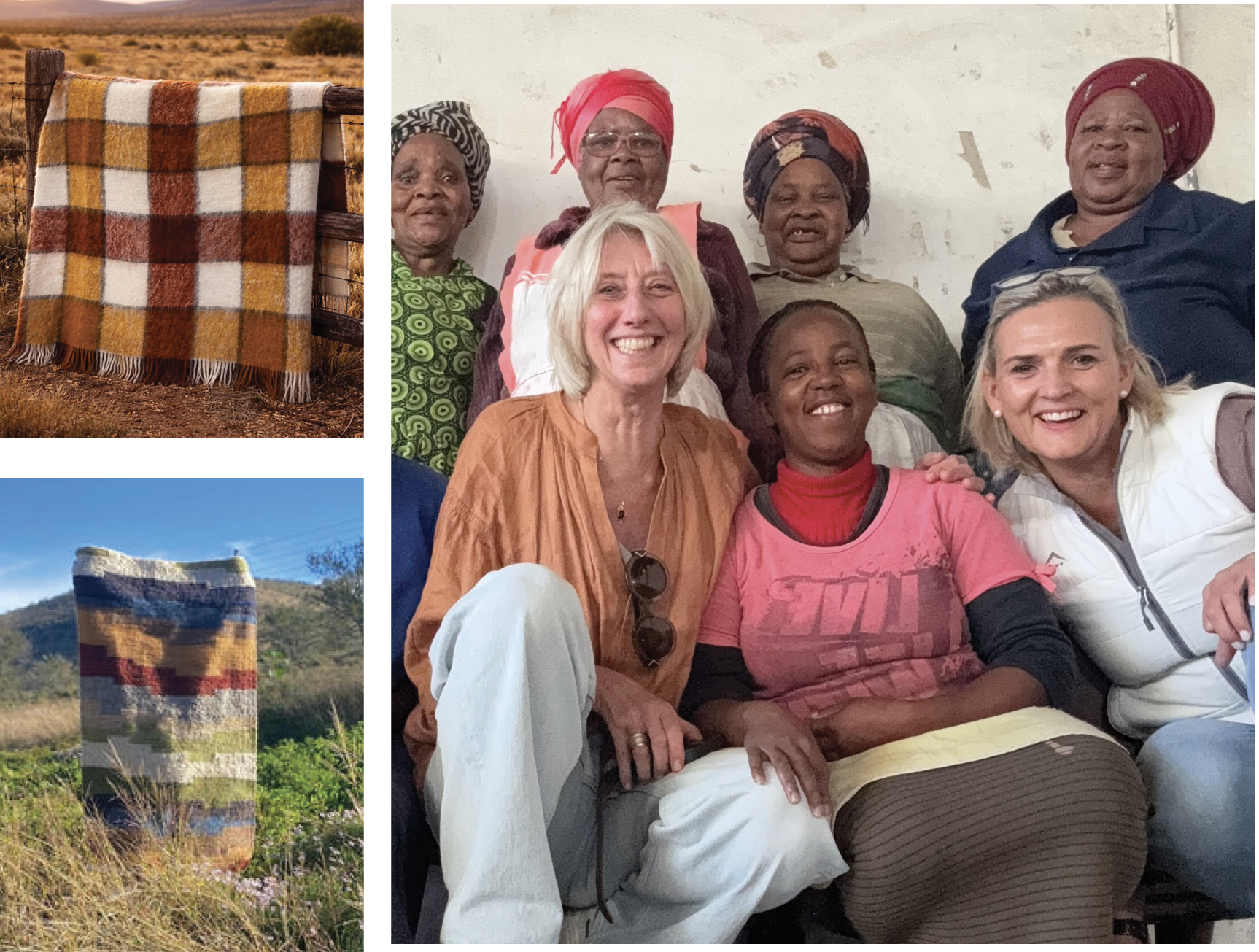 marks Women's Month, entrepreneur Katrina Nel is proving that heritage and innovation can go hand in hand.
Through her business, Sunday Child, she is building on a family legacy to create handcrafted products made from South Africa's natural fibres.
She launched the business as a clothing brand in 2012. A decade later, she expanded it to include carpets and homeware. Today, Sunday Child combines fashion, interiors and natural fibres under a single brand, allowing Nel to honour her family's heritage while shaping a new chapter for future generations.
The business produces a wide range of handcrafted products made primarily from natural fibres, including handwoven mohair carpets and mohair blankets. It also sells socks, scarves, beanies, wool slippers and clothing made from natural fibres.
“My business was founded on a family legacy that spans several generations. My parents, Jan Paul and Elsa Barnard, established their own brands decades ago, and from an early age, I watched them transform one of South Africa's most remarkable natural fibres into beautiful, handcrafted pieces.
“Their work extended far beyond carpets and included curtains, blankets, knitwear, cushion covers, table runners and a variety of other home décor items,” she explained.
Her father focused primarily on production, while her mother became known for her distinctive carpet and knitwear designs. Together, they built a business that not only produced exceptional products but also created opportunities within surrounding communities.
With most of her childhood spent among looms, spinning wheels, bales of mohair and talented artisans, Nel learnt the value of natural fibres, attention to detail and the importance of respecting the natural world and the people whose hands bring these creations to life.
The business production process begins on the farm, where Angora goats are carefully raised in the Eastern Cape. Their fleeces are shorn, sorted, cleaned, spun into yarn, dyed where necessary and prepared for weaving. The yarn is then transformed by skilled artisans into carpets.
“Many of our weavers have spent decades mastering their craft. The greatest challenges we face are often linked to our rural location, access to infrastructure, transport, machinery, reliable services, rising production costs and competition from inexpensive, mass-produced imports,” she explained.
To address these challenges, Nel focuses on quality rather than quantity. She invests in people, maintains long-term relationships with suppliers and customers, and remains committed to producing authentic products that stand the test of time.
Although the business has not yet received any funding from government, it has established a relationship with the Small Enterprise Development and Finance Agency, which invited it to exhibit at Decorex Johannesburg 2026, held recently in Sandton. The business currently employs 16 people permanently.
 Email
Email Facebook
 Twitter
 WhatsApp