South Africa has 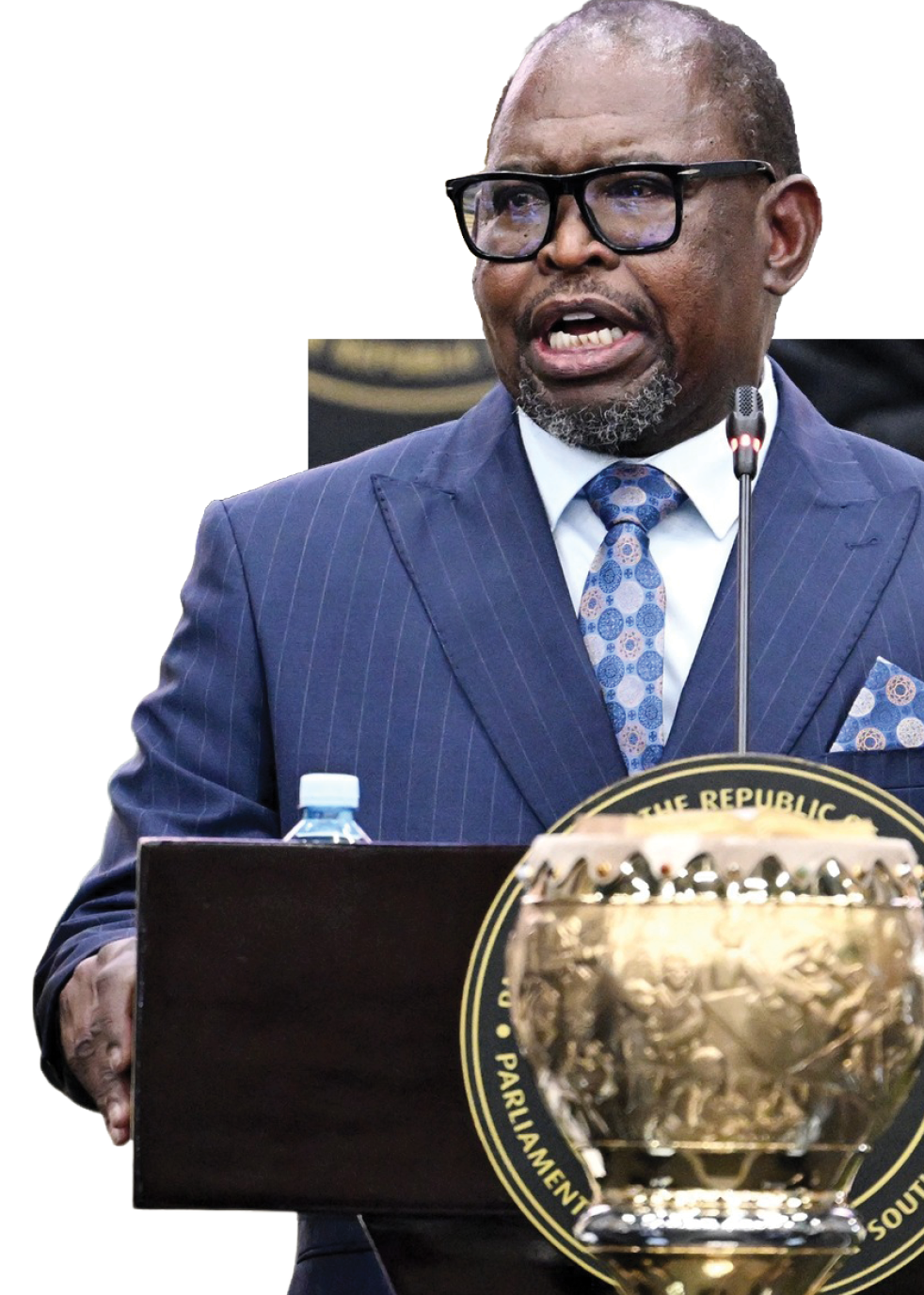 reached an important turning point in the management of public finances, as government begins to see the results of reforms, said Minister of Finance Enoch Godongwana.
The assurance came as the Minister delivered the 2026 Budget Speech in Parliament recently, where he added that the country was moving from a period of crisis to one of cautious recovery.
“Five years ago, the outlook was stark,” he said.
“State Capture had hollowed out critical institutions and weakened state-owned entities. Public finances were under severe strain and growth had stalled. The warning lights were flashing.”
South Africa had also been downgraded to junk status, faced the impact of the Covid-19 pandemic and global conflicts, and was placed on the Financial Action Task Force grey list in 2023.
“Faced with this crisis, we chose not to be defined by it. Instead, we turned it into a catalyst for change,” Godongwana said.
At the time, government committed itself to three key priorities: stabilising debt, investing in infrastructure and improving the way public money is spent.
“For the first time in 17 years, debt will stabilise, and it will continue to fall in the coming years,” he announced.
The budget deficit has narrowed, and debt-service costs are starting to decline. South Africa has also been removed from the Financial Action Task Force (FATF) grey list and secured its first credit rating upgrade in 17 years.
The Financial Action Task Force (FATF) leads global action to tackle money laundering, terrorist and proliferation financing.
“These are signals of restored credibility. Of renewed resilience. And of a nation regaining its footing,” the Minister said.
Relief for taxpayers and small businesses
In a welcome development for households and businesses, government had withdrawn the R20 billion in tax increases that were provisionally included in last year’s Budget.
Personal income tax brackets and rebates will be adjusted in line with inflation, helping to protect workers from so-called “bracket creep”.
To encourage a culture of saving, the annual tax-free investment limit will increase from R36 000 to R46 000. The retirement fund deduction limit will also increase, allowing South Africans to invest more towards their retirement.
For small businesses, the compulsory Value Added Tax registration threshold was increased from R1 million to R2.3 million.
VAT (Value-Added Tax) is a tax added to the price of goods and services.
“We are taking other measures to support small businesses,” the Minister added, including increasing capital gains tax relief for older small business owners when they sell their enterprises.
However, some tax increases were unavoidable. Excise duties on tobacco and alcohol will increase in line with inflation. Fuel levies will also rise modestly.
Social grants
In 2026/27, social grants are allocated R292.8 billion.
From April 2026:
- The old age, disability and care dependency grants will increase by R80 to R2 400.
- The war veterans grant will increase to R2 420.
- The foster care grant will increase to R1 290 in April and R1 300 in October.
- The child support grant and grant-in-aid will increase by R20 to R580.
- The Social Relief of Distress grant will continue in its current form.
“Government spending remains highly redistributive,” the Minister said, noting that social grants support 26.5 million beneficiaries.
At the same time, he stressed that fraud and abuse would be dealt with firmly.
“We are committed to improving access for the many South Africans deserving and eligible for social support. Abuse of the system will not be tolerated,” he said, adding that improved verification systems have already identified thousands of irregular grants.
Education, health and infrastructure
Education remains the largest area of spending, accounting for nearly a quarter of total consolidated expenditure over the medium term.
Early childhood development funding will expand services to an additional 300 000 children, while the National School Nutrition Programme will continue feeding millions of learners across the country.
In health, R26 billion is allocated to provinces to strengthen the HIV and AIDS programme, including the prevention of mother-to-child transmission and the provision of antiretroviral treatment. Additional funding will also support the employment of doctors and address shortages in public health facilities.
Infrastructure investment
Infrastructure 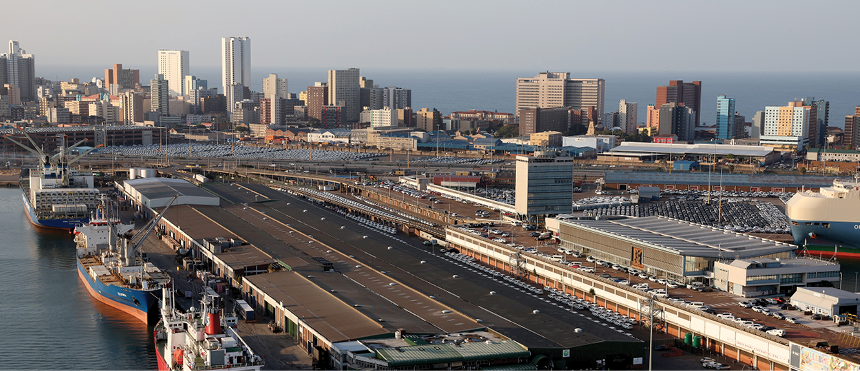 investment remains central to government’s growth strategy.
“Infrastructure investment remains the foundation upon which long-term economic growth, improved service delivery and job creation are built,” Godongwana said.
Over the medium term, public sector infrastructure spending will exceed R1 trillion. This includes investment in roads, rail, water and energy projects aimed at improving service delivery and supporting economic growth.
Strengthening municipalities and fighting crime
The Minister acknowledged that many municipalities are in financial and operational distress.
“Municipalities must return to the foundational principle of fiscal integrity,” he said, emphasising that money collected for services such as water and electricity must be reinvested in maintaining those services.
R27.7 billion has been allocated over the medium term to support performance-linked reforms in metro trading services, focusing on electricity, water, sanitation and waste management.
Additional funding has also been allocated to strengthen peace and security, including support for the police, defence force and Border Management Authority.
 Email
Email Facebook
 Twitter
 WhatsApp