
When Jane Simmonds 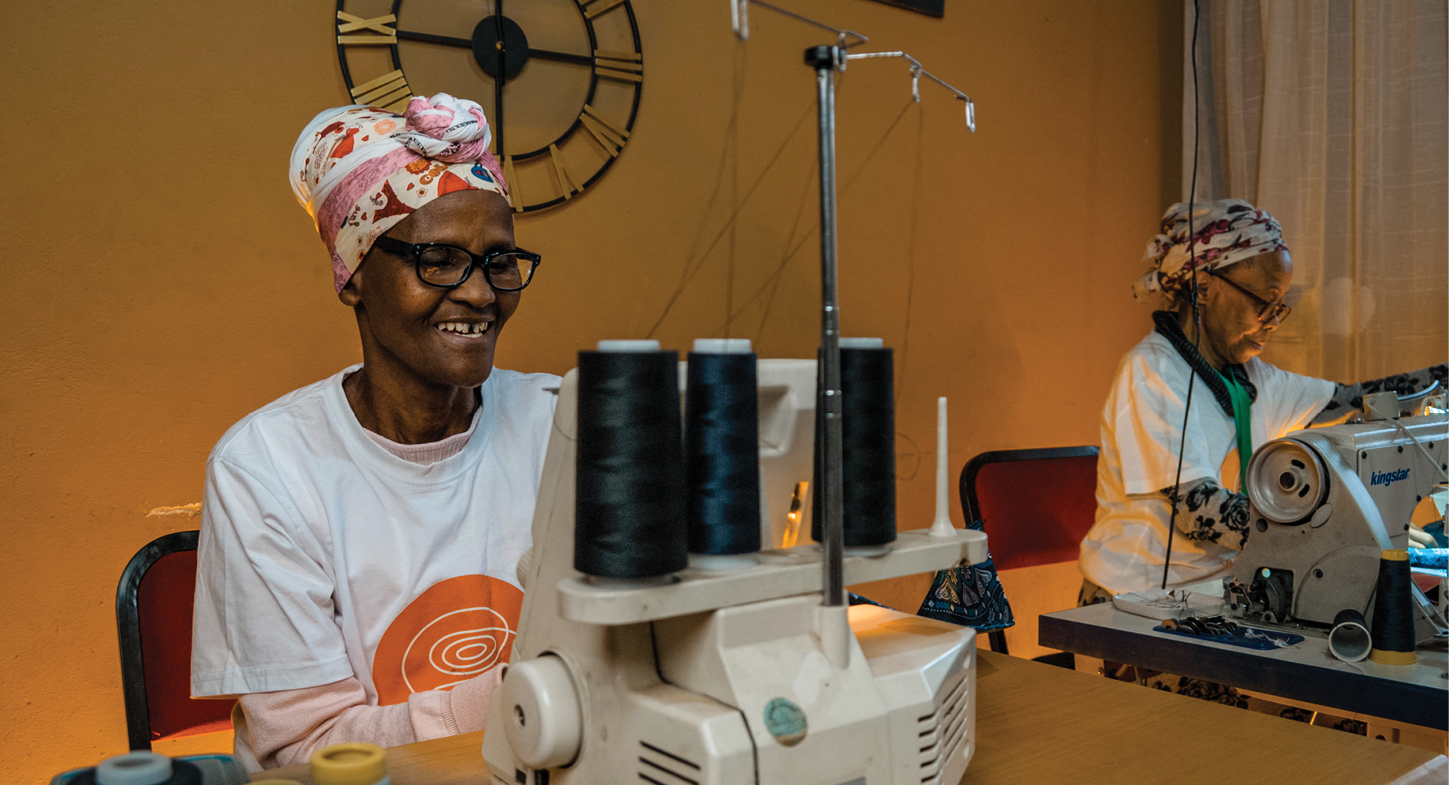 stood on a stage in Paris a few weeks ago to accept the Well-being Programmes Award at the Women Changing the World Awards, she wasn’t thinking about the glamour of the occasion.
Instead, her mind was on the gogos (grannies) back home in Alexandra who had started it all with a conversation about HIV that no one else wanted to have.
It began in 2014, when a grandmother in Alexandra told Simmonds that all five of her children had died of AIDS in the early 2000s. She was now raising 13 grandchildren and did not know how to talk to them about HIV/AIDS and safer sexual choices. She asked Simmonds for help.
Simmonds returned to university and completed a Master’s in Public Health, determined to find a meaningful answer. Along the way, she recognised what many overlook: grandmothers are not marginalised older people waiting on the sidelines. They are caregivers, community leaders and powerful agents of change.
She founded goGOGOgo in 2020. Today, the organisation works with grandmothers across South Africa who are raising over four million children in under-resourced communities.
It delivers intergenerational programmes focused on digital literacy, health education and income generation, aimed at improving health outcomes and expanding opportunities for both gogos and the children in their care.
The road from Alexandra to Paris, she said, was built on one thing: a refusal to stop. “Perseverance, dedication, commitment and belief in the extraordinary power and resilience of grandmothers,” she says. “And a determination not to stop speaking — to NGOs, funders and anyone willing to listen about the importance of their work.”
For Simmonds, the win means more than a trophy. “Gogos are a global phenomenon. They are now being recognised as serious agents of change rather than marginalised older people,” she said.
Her organisation has grown significantly since Vuk’uzenzele last featured goGOGOgo in 2021. GOGObox brings weekly boxing classes to gogos and mkhulus, giving older caregivers time to focus on their own health and wellbeing.
Masifunde GOGO! (“Let’s Read, Gogo!”) sets up free mini-libraries, providing access to African storybooks translated into 11 South African languages, as well as wordless picture books.
These libraries are installed in local centres and run by volunteer gogos who nurture a culture of reading in their communities.
“Literacy remains an untapped bridge to close the generation gap and support the transfer of history, values and identity,” said project lead Hlumelo Gxotiwe. “Gogos are repositories of knowledge and often the first model for children’s curiosity and learning.”
Masidlale GOGO! (“Let’s Play, Gogo!”) encourages conversations about safe spaces and age-friendly communities, while Masikhulume GOGO! (“Let’s Talk, Gogo!”) opens discussions on sex, sexuality and gender-based violence between gogos and their adolescent grandchildren.
There is also a programme focused on the first 1,000 days of a child’s life, from pregnancy to age two, where grandmothers are guided on antenatal care, nutrition and breastfeeding.
In addition, gogos earn an income by sewing shopping totes from their homes, which are sold through Amazon, Taste of Africa and Jackson's Food Stores in Johannesburg.
Funding remains the biggest challenge — sustaining staff, maintaining programmes and convincing donors that impact requires people and time, not just equipment.
goGOGOgo is currently supported by IRD Global and the DG Murray Trust, and is actively seeking new partners. The Paris award has given the team a much-needed boost at a critical time.
For more information email info@go-gogo-go.org.za or visit www.go-gogo-go.org.za.
 Email
Email Facebook
 Twitter
 WhatsApp