


Women 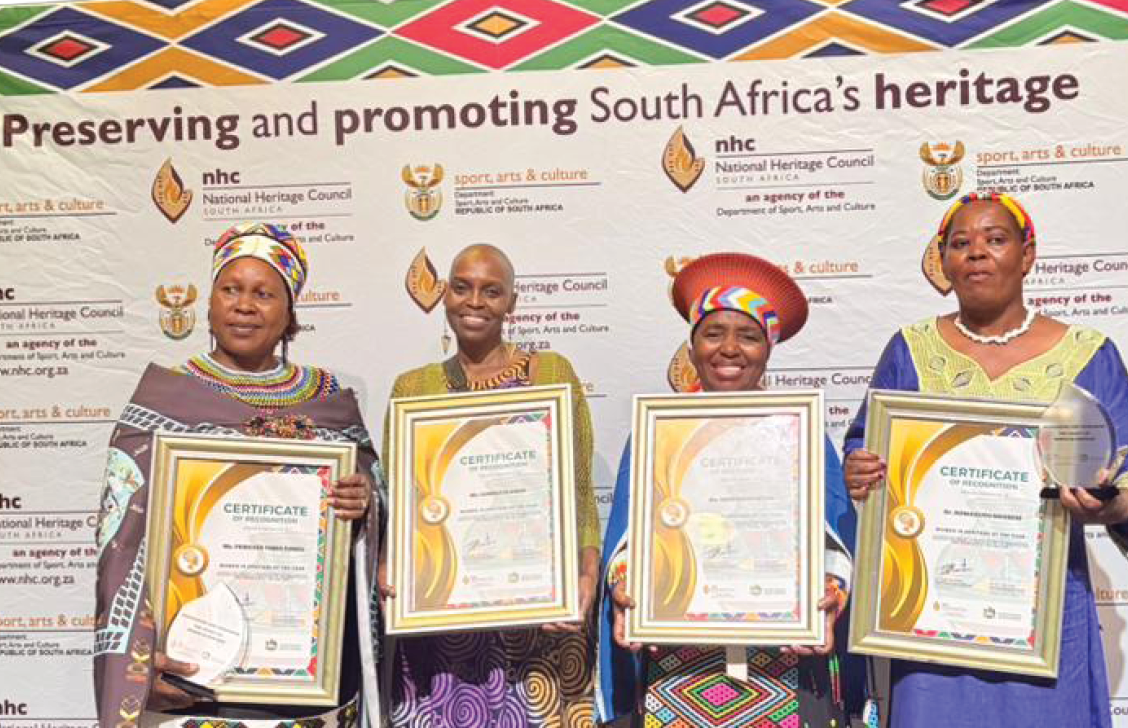 play a central role in keeping South Africa’s oral traditions, indigenous knowledge and cultural practices alive. One such woman is Nomthetho Sibisi, a Zulu cultural artist and heritage advocate from Mahlabathini in KwaZulu Natal.
Sibisi is the founder of UZulu Arts and Heritage, a non profit organisation she started in 2016 after leaving the public service. Through the organisation, she uses arts for social change and creates opportunities for people with disabilities to share their stories through performance, storytelling and traditional music.
A pioneer of the umakhweyana (traditional bow), Sibisi promotes Zulu heritage, youth development and disability empowerment through therapeutic theatre and literature.
Her work was recently honoured at the Women in Heritage programme in Durban hosted by the National Heritage Council of South Africa (NHC) and the KwaZulu Natal Department of Sport, Arts and Culture.
Receiving her award, Sibisi said she was grateful for the recognition. “I encourage young people to be proud of who they are and to value their heritage so they can pass it on to future generations,” Sibisi added.
The NHC’s Executive for Core Business, Dr Mirriam Tawane, said women are essential custodians of culture in their communities.
“As primary caregivers, women are uniquely positioned to pass on traditional practices, music, art and knowledge to younger generations,” Dr Tawane said. She added that heritage is not only a cultural asset but also a tool for economic empowerment, social cohesion and sustainable community development.
Dr Tawane noted that women’s contributions are often overlooked, even though they are the backbone of households and key to preserving indigenous knowledge.
“Our culture is slowly disappearing. Many young people may not even be aware of the wealth of knowledge our mothers and grandmothers carry,” Dr Tawane emphasised.
About the programme
Launched in 2024, the Women in Heritage programme takes place annually to honour the legacy of women, including the historic 1956 Women’s March, where over 20,000 women marched against apartheid pass laws and to highlight the important role women play in protecting and promoting South Africa’s heritage.
Why Heritage Matters
- Helps youth learn about their identity and culture.
- Strengthens families and communities through shared practices.
- Supports local economic growth through arts, crafts and cultural tourism.
- Protects indigenous knowledge that might otherwise disappear.
 Email
Email Facebook
 Twitter
 WhatsApp