


The Electoral  Commission of South Africa (IEC) has urged South Africans to check that they are registered to vote in the areas where they live as preparations for the upcoming municipal elections gather pace.
A national voter registration weekend will take place on 20–21 June 2026, giving eligible voters the opportunity to register or update their details closer to where they live.
“The intended outcome of the registration weekend is to broaden electoral participation,” the IEC said in a statement issued after a recent media briefing.
The Commission explained that the timing of the registration weekend is based on its planning assumption that it must be ready to hold elections whenever they are legally called.
“This alignment ensures procedural certainty, operational readiness and full compliance with the legal framework,” it said.
The election date will be proclaimed by Minister of Cooperative Governance and Traditional Affairs, and is expected to fall between 1 November 2026 and 1 February 2027, as required by law.
Once the election date is announced, the clock will begin ticking for several critical electoral processes.
“The proclamation of the election date will formally trigger the performance of activities that underpin the election timetable,” the Commission said.
These include “the certification and publication of the voters’ roll, inspection of the voters’ roll and the lodging of objections, consideration and adjudication of objections by the Commission, and the submission of candidate nominations and the applicable cut-off deadlines.”
The Commission stressed that an early announcement of the election date is essential because it determines where citizens should register to vote.
“The Commission’s position is that an early announcement of an election date is critical to allow South Africans to decide where they will be on voting day, as this directly determines where they register.”
It said this is particularly important for people such as students who may live in one province while studying in another.
“For instance, a student studying in one province but ordinarily residing in another must know whether they will be on campus or at home when the country votes. That clarity ensures they register correctly and avoids unnecessary administrative complications closer to election day.”
Unlike national and provincial elections, local government elections require voters to cast their ballots at the voting station where they are registered.
“In a local government election, there is no legal facility to vote outside the voting station of registration.
“This is a necessary requirement as it ensures that voters vote in a ward election that has a relationship with their place of ordinary residence.”
Election preparations
Preparations for the elections are already under way, with the ward delimitation process forming a key milestone. In December 2025, the Municipal Demarcation Board finalised and handed over 4 305 wards, representing 95% of all wards nationally.
“Citizens register where they live, and these registrations are organised into the voters’ roll segments per voting district,” the Commission explained, noting that regular updates to voter details help ensure accurate electoral planning.
Alongside registration efforts, the IEC has intensified voter education initiatives. More than 530 municipal outreach coordinators have been appointed to strengthen civic education across municipalities and encourage participation in the democratic process.
Since the start of the financial year, the Commission said it has reached more than 3.43 million people through community outreach programmes focused on voter education, particularly among young and first-time voters.
Fake voter registration websites
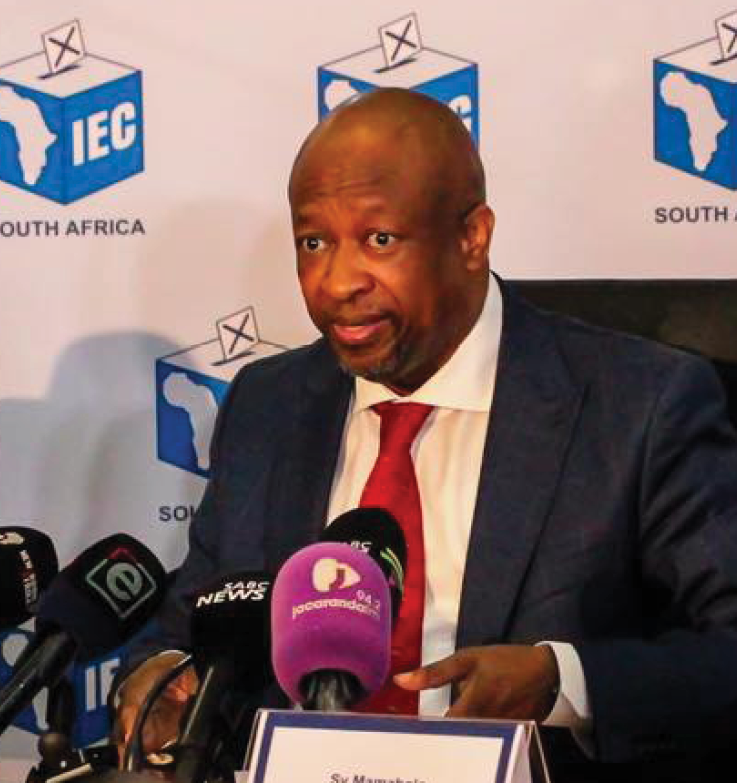 The Commission has warned the public about fake voter registration websites and fraudulent recruitment notices circulating online.
“The Commission is aware of fake websites impersonating its domain. The sites are intended to lure unsuspecting members of the public to share their personal information,” it warned.
It cautioned citizens not to click on suspicious links or share personal information such as identity numbers, phone numbers or addresses on unverified platforms.
The only official online voter registration portals are RegisterToVote.org.za and www.elections.org.za.
The IEC also warned about false recruitment advertisments circulating on social media.
It stressed that all legitimate vacancies are advertised only on its official website and that the Commission does not request payment at any stage of its recruitment processes.
 Email
Email Facebook
 Twitter
 WhatsApp