


After losing 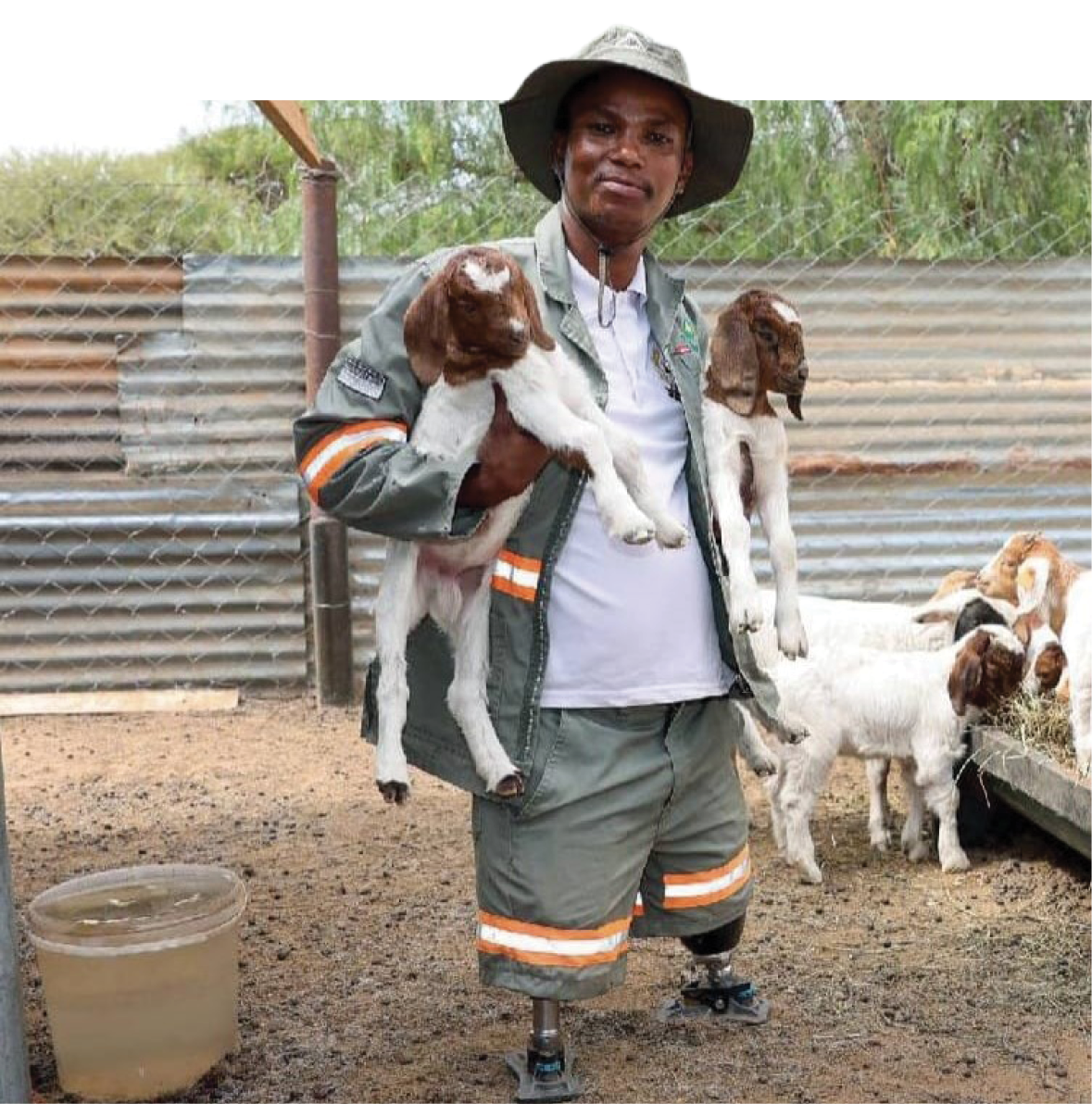 both legs in a road accident, Realeboga Mangwegape feared the farming business he had just started would come to nothing.
Today, the award-winning farmer is growing his herd and creating employment for others.
In 2021, the 38-year-old from Taung in North West was on his way to a job interview in Johannesburg when he was struck by a truck and then by another car. He was severely injured, leading to both his legs being amputated above the knee.
As he lay in hospital, moving in and out of a coma, his thoughts kept returning to the business he had only just started.
"I just started this right now. Why now?" he recalled thinking.
The accident brought an abrupt and painful adjustment.
But Mangwegape held on to the farming ambition he had begun building with two goats in 2019.
“I like to say this funny thing: it [farming] gave me a treasure. During the time I got injured, I had just started with the two goats."
His connection to farming reaches back to childhood. He grew up around horses and livestock, watching older people in his community care for their animals. As a young man, he helped take cattle into the fields on horseback. What began as an interest gradually became a livelihood.
Mangwegape registered his company in 2019 and later received a voucher from the Department of Agriculture to buy livestock.
He now has 75 goats and 76 sheep. He raises the animals for sale, usually keeping them for six to eight months. While his clients mainly come from the community, he also sells at auctions.
His progress has created work for others. He employs one person permanently and two on a part-time basis.
Recognition for perseverance
 In October, Mangwegape received the Accessibility in Agriculture: Living with Disabilities Award at the South African Agricultural Awards.
“Even today, I can’t explain it [winning the award]. I was so happy. It was the first time for me to be in that space,” he said.
For Mangwegape, the award affirms that his effort is paying off. He hopes it will also encourage others, whether they are living with disabilities or not, to take steps towards their own goals.
“I want people to be inspired by the award. Those who are at the corner, those who are doing nothing, they must wake up and start. I want them to say, ‘Let me do something about my life’ whether they are living with disabilities or not,” he said.
Mangwegape added that his story should encourage people to see what can happen when they begin working towards a goal, rather than compare themselves with him.
“No one will come and rescue you if you don’t do anything. If you are doing something, people will recognise it and ask, ‘Do you need assistance?’ They will come to help you grow your business or whatever you are doing in life.”
Mangwegape currently farms in his backyard. He does, however, have ambitions to one day move to a smallholding and, eventually, become a commercial farmer.
He is also calling for better access to information and support for farmers with disabilities, including guidance on registering businesses, improving their farming and applying for land.
“There are people with disabilities who have been farming for years and doing well. We need to change the narrative,” he concluded.
 Email
 Facebook
 Twitter
 WhatsApp