
Seati Moloi 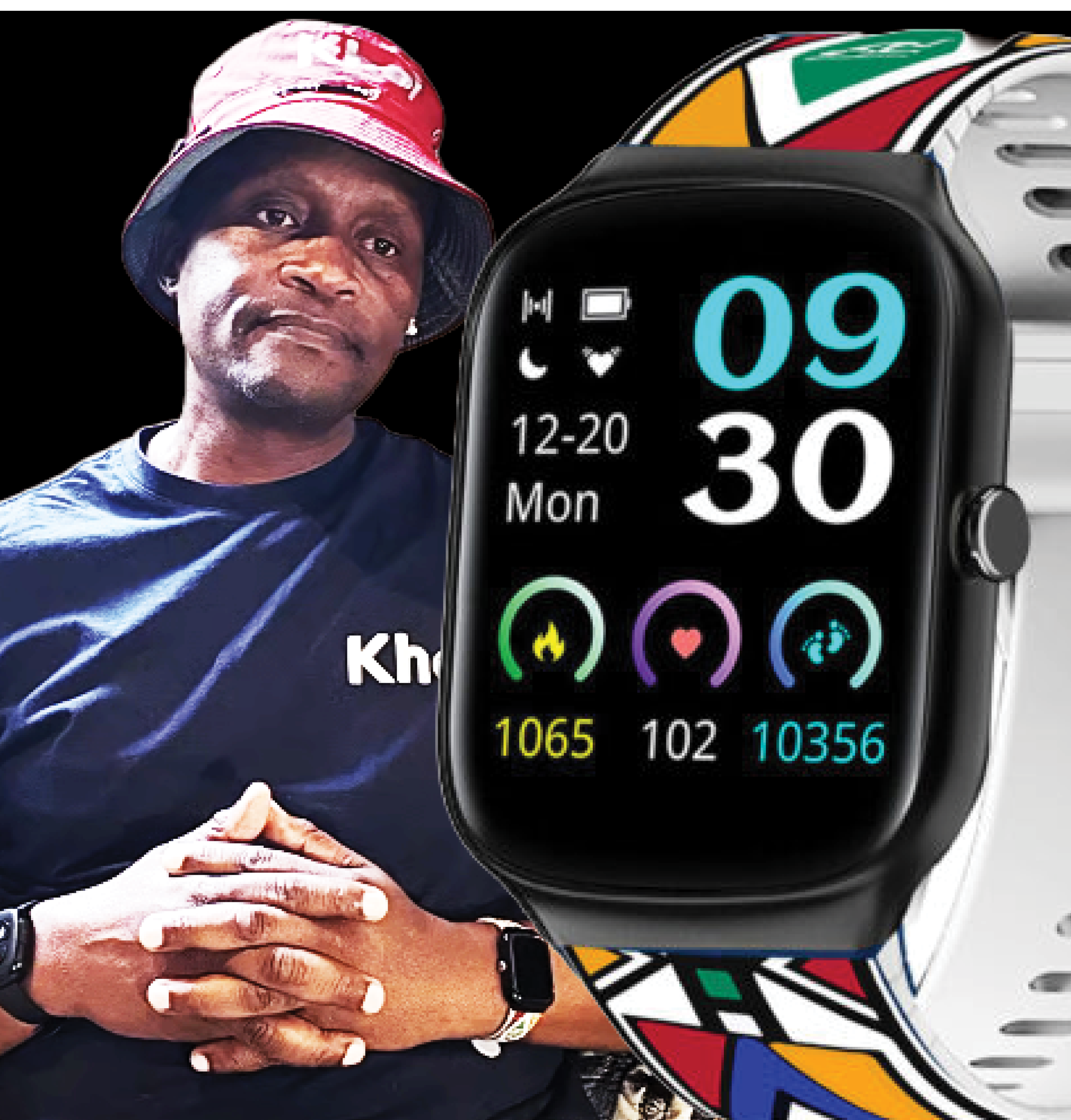 of Soweto in Johannesburg is a software developer who is disrupting the tech industry by putting proudly South African wearable devices in the global market.
As a computer science professional, he was part of the group that was categorised under affirmative action because his profession was previously dominated by white people under the apartheid government.
Having spent the early years of his career working at one of South Africa's banking institutions as a software developer—specialising in developing and maintaining banking and automated teller machine applications before venturing into entrepreneurship—he is now the founder and Chief Executive Officer of Khoi Tech.
The Soweto-based company specialises in designing and manufacturing wearable tech devices that enhance health monitoring and performance management, including smart watches and wireless earphones.
“Our business solutions include employee wellness solutions for the occupational health sector across industries, doctor-to-patient remote monitoring solutions for the public and private healthcare sectors, fatigue and wellness solutions for fleet industries, and sports team data analytics solutions for sports teams and performance environments,” he explained.
These solutions provide actionable data for proactive interventions and can play an important role in life-saving scenarios, particularly in healthcare, transport, mining, and elderly care settings.
He started the business during the COVID-19 pandemic after running several computer and technology-related businesses with his friends.
He developed the Khoi Afriwatch1, a smartwatch offering real-time health data, and the business received a R500,000 grant from Telkom’s FutureMakers programme in 2022. This helped the company cover manufacturing costs, and for the smart watch to achieve a remarkable 94% accuracy in health metrics.
Monitoring lung cancer patients
The company has also partnered with Chris Hani Baragwanath Academic Hospital, which uses the smart watches to monitor about 30 lung cancer patients remotely. Moloi believes that this helps the hospital to improve service delivery beyond its healthcare facilities because there are not enough beds to accommodate patients.
“The patients receive the smart watch from us, a cellphone and data from Telkom, and we have built specialist software to allow the hospital to monitor its patients remotely, with the help of Wits University. There are plans to roll out the programme to 150 patients and ultimately reach about 1,000 patients.
“Beyond funding, Telkom also provided our business with mentorship, training, market access, supplier development, and real procurement opportunities. Telkom buys our products in bulk and distributes them across more than 300 of its stores nationwide, and they also sponsor us with marketing opportunities.
“On 1 May, we will be launching our first walk-in store in Centurion, Gauteng. This was also made possible by Telkom through our partnership,” he explained.
Telkom is a partially state-owned, publicly listed company rather than a traditional state-owned enterprise. The South African government directly holds a 40.5% stake, with the Department of Communications and Digital Technologies acting as the representative shareholder. It operates as a commercial entity, listed on the Johannesburg Stock Exchange, with significant private investment.
Khoi Tech products are also available at selected Makro stores across the country, as well as chain stores across Soweto.
Although the company has a contract with an international manufacturer to produce its devices, the intellectual property behind the Khoi brand remains local and is 100% owned by Khoi Tech, ensuring that innovation, value creation, and brand equity remain anchored in South Africa.
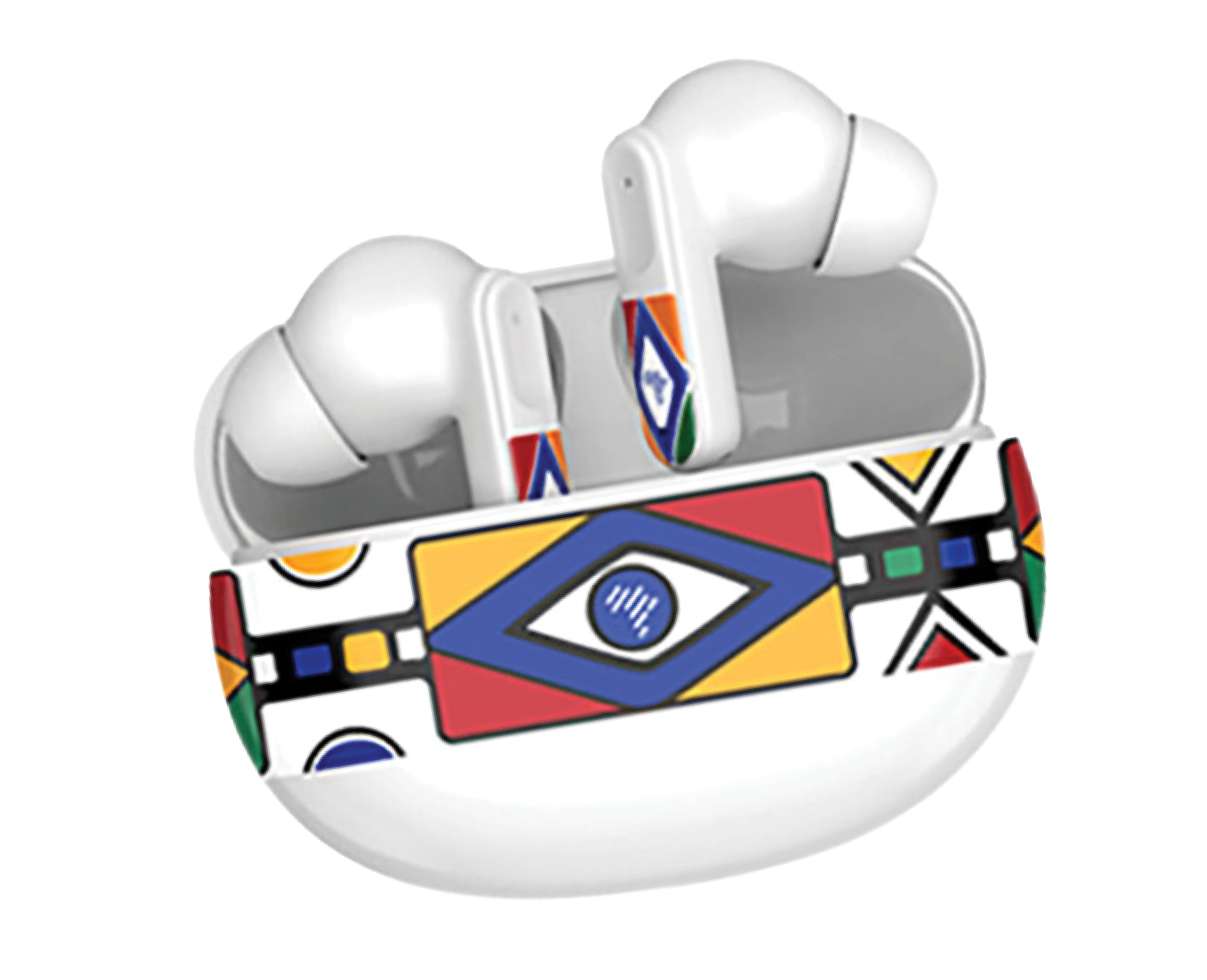
In November 2024, Khoi Tech launched the Khoi Afripods1 True Wireless Earphones, blending innovative functionality with African aesthetics.
Certified by ICASA
Moloi said the products are also certified by the Independent Communications Authority of South Africa (ICASA) to ensure that they are safe for human use. He is committed to challenging global consumer electronics brands by placing African innovation at the forefront.
 “Although most of the features that our products have are not new, we decided to disrupt the market so that South Africa can have representation in the global market of wearable devices. We cannot import all products, but we can produce our own and compete with international businesses,” he explained.
Initially, the company started with four software developers but has now increased its staff complement to 20 employees.
Khoi Tech is a member of Proudly South African, a platform that Moloi believes is crucial for the business because it also provides access to new markets.
For more information visit www.khoi.africa or email info@khoi.africa.
Telkom’s Future-Makers Programme at www.group.telkom.co.za/about-us/business-units.html
Did you know?
President Cyril Ramaphosa has called for urgent reforms to eliminate red tape, warning that municipal bureaucratic delays stifle investment and township entrepreneurship. Speaking at the 2026 National Local Economic Development Summit, the President identified administrative backlogs as a primary barrier preventing small enterprises from accessing vital government support. The President urged local governments to act decisively, fostering private-sector collaboration to build a business-friendly environment that unleashes South Africa's entrepreneurial potential.
 Email
Email Facebook
 Twitter
 WhatsApp